Home – Medical Center in Sharjah – Radiology Examinations in Sharjah
Lebanese Medical Center proudly partners with Radiology in Sharjah to provide diagnostic imaging guided by licensed radiology professionals, high-precision equipment, and structured reports your doctor can utilize for your health. Of course, there are some important symptoms enforcing a person to visit our center.
Actually, this article is for general education and service guidance. It does not replace a clinician’s evaluation or an individualized medical plan. For severe or urgent symptoms, seek immediate medical care.
As a matter of fact, radiology at Radiology in Sharjah means medical imaging tests that help detect, confirm, or monitor health conditions—often earlier than symptoms become severe. Imaging supports decisions for injuries (like fractures), internal concerns (like kidney or gallbladder issues), chronic problems (like spine or joint pain), and preventive care (like breast screening).
Of course, the best scan is the one that matches your clinical question. Your doctor chooses an imaging modality based on symptoms, exam findings, medical history, and what needs to be ruled in or ruled out.
Diagnostic imaging creates pictures of the inside of your body:
Uses radiation: X-ray, CT, mammography (low-dose X-rays).
Does not use radiation: Ultrasound, MRI.
A radiologist interprets the images and writes a medical report that helps your treating doctor decide what to do next.
Patients typically book imaging to:
If symptoms are persistent, worsening, or unclear, imaging may help your doctor pinpoint the cause and at radiology center in sharjah select the safest next step.
Besides, track your symptoms for 3–7 days (or less if severe)—where it hurts, what triggers it, what relieves it—and share that with your clinician. This often reduces unnecessary tests and improves scan selection.
Consider booking promptly if you have:
Choosing the right scan at Radiology in Sharjah isn’t about “the most advanced machine.” It’s about the best match for your medical question.
Modality | Best for | Uses radiation? | Common examples |
|---|---|---|---|
Digital X-ray | Bones, chest overview | Yes | Fractures, chest assessment, joint alignment |
CT scan | Fast, detailed internal images | Yes | Trauma assessment, stones, certain urgent internal concerns |
MRI | Soft tissue detail | No | Brain/spine, discs, ligaments, complex joint pain |
Ultrasound | Pregnancy + many organs | No | Pregnancy monitoring, abdomen/pelvis, kidneys, gallbladder |
Mammography | Breast screening/evaluation | Yes | Screening and evaluation of breast symptoms |
We offer a streamlined pathway: the right scan, performed with clinically appropriate protocols, plus a structured report to support your doctor’s next step.
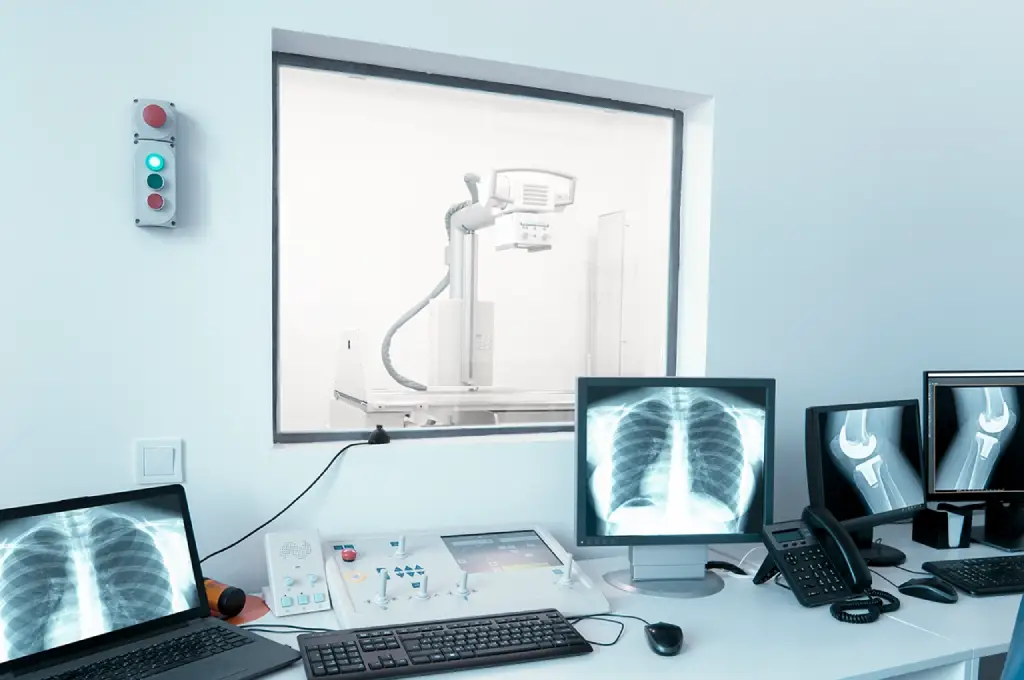
Digital X-rays are a core diagnostic tool—especially for fractures, chest evaluation, and joint alignment. also Digital systems support efficient workflow and high-quality images,.
You may need an X-ray if: suspected fracture, chest symptoms requiring imaging, certain joint issues.
MRI creates detailed images of the brain, spine, joints, and many internal organs without ionizing radiation. It’s often chosen when your clinician needs high detail of soft tissue.
You may need an MRI if: persistent back/neck pain with nerve symptoms, ligament or meniscus injury, complex joint pain, neurological evaluation.
CT produces high-resolution cross-sectional images quickly, which can be important in urgent assessment (e.g., trauma) or when detailed internal imaging is needed.
You may need a CT if: suspected internal injury, stone assessment, certain urgent abdominal/chest concerns (as directed by your clinician).
Ultrasound uses sound waves (not radiation) and is widely used for pregnancy monitoring and for evaluating organs such as the liver, gallbladder, kidneys, and pelvic organs.
You may need an ultrasound if: pregnancy monitoring, suspected gallbladder issues, pelvic concerns, certain abdominal pain patterns.
Nuchal translucency (NT) screening is typically performed between 11 and 14 weeks as part of early pregnancy assessment, based on your obstetrician’s plan.
Mammography is a key test for breast screening and early detection. If you have symptoms (like a lump or skin changes), your clinician may recommend diagnostic evaluation rather than routine screening.
Some radiology departments at Radiology in Sharjah also offer advanced imaging or guided procedures (availability can vary by facility). If your clinical case requires it, our team can advise you on the appropriate pathway.
Examples include:
Bone density testing (DEXA) for osteoporosis risk.
Fluoroscopy studies (dynamic X-ray imaging for specific GI/GU tests).
CT/MRI angiography for blood vessel assessment.
Image-guided procedures such as biopsy guidance in selected cases.
Interventional radiology (minimally invasive treatments guided by imaging).
If you’re unsure whether a specific test is available or appropriate, share your referral or symptoms and we’ll guide you to the correct next step.
Radiology offered by a good radiologist in sharjah depends on the modality and the clinical need.
Anyway, always inform the imaging team if you are pregnant or might be pregnant so the safest plan can be selected.
Small details can improve image quality and reduce repeat imaging:
If you don’t know what applies to your scan type, contact our team—pre-visit guidance is part of safe imaging.
Most imaging appointments at Radiology in Sharjah follow a predictable flow:
Check-in & safety screening (especially important for MRI and any contrast consideration).
Positioning and instructions from the radiology technologist.
Imaging acquisition (the scan itself).
Post-scan guidance (when relevant).
Report preparation for your referring doctor.
Speed matters, but clarity is what improves medical decisions. A strong radiology report typically includes:
Our aim is a report that helps your doctor decide the next step—reassurance, follow-up, treatment, or referral—without unnecessary delays.
Radiology is widely available, but patient experience and clinical usefulness can vary. What usually matters most for Radiology in Sharjah is:
Clinically appropriate protocols and safety screening.
Qualified oversight and consistent interpretation standards.
Clear pre-visit instructions and patient communication.
Structured reporting that answers the referring question.
A smooth pathway that reduces unnecessary repeat imaging.
If you’re unsure which scan you need, bring your referral (or a short symptom list) and request guidance. Choosing the right test first can save time, cost, and stress.
Finally, radiology in Sharjah can be the missing piece that turns symptoms into clear medical direction—especially when imaging is chosen wisely and performed with safe, modern protocols.
Quick recap
Choose the scan based on the clinical question—not just availability.
Share prior imaging and your symptom timeline to improve accuracy 100%.
Disclose pregnancy possibility, implants, and allergies early.
Expect a structured report that supports your doctor’s next step.
Seek urgent care for severe symptoms (major trauma, sudden weakness, severe chest pain).
If you need Radiology in Sharjah for an injury, pregnancy imaging, ongoing pain, or screening, contact us and book with Lebanese Medical Center to request guidance on the most suitable modality for your case.
Real experiences from our patients, told with honesty and heart. Discover how compassionate care at LMC Sharjah transforms lives every day.
The best center in all of Sharjah. The team is very respectful and cooperative, and the doctors are very good. I recommend the center to everyone. It is tidy and clean. Sarah and Judy, the receptionists, are the best people.
LMC Medical Center in UAE stands out among leading medical centers in Sharjah and Dubai, offering trusted healthcare services across multiple specialties. We focus on quality care, patient comfort, and expert treatment for every stage of life.